
Miri, Sarawak — Indigenous community representatives in Sarawak have expressed concern regarding the confiscation of timber harvested for the construction of a family home, while destructive large-scale logging activities continue to be permitted.
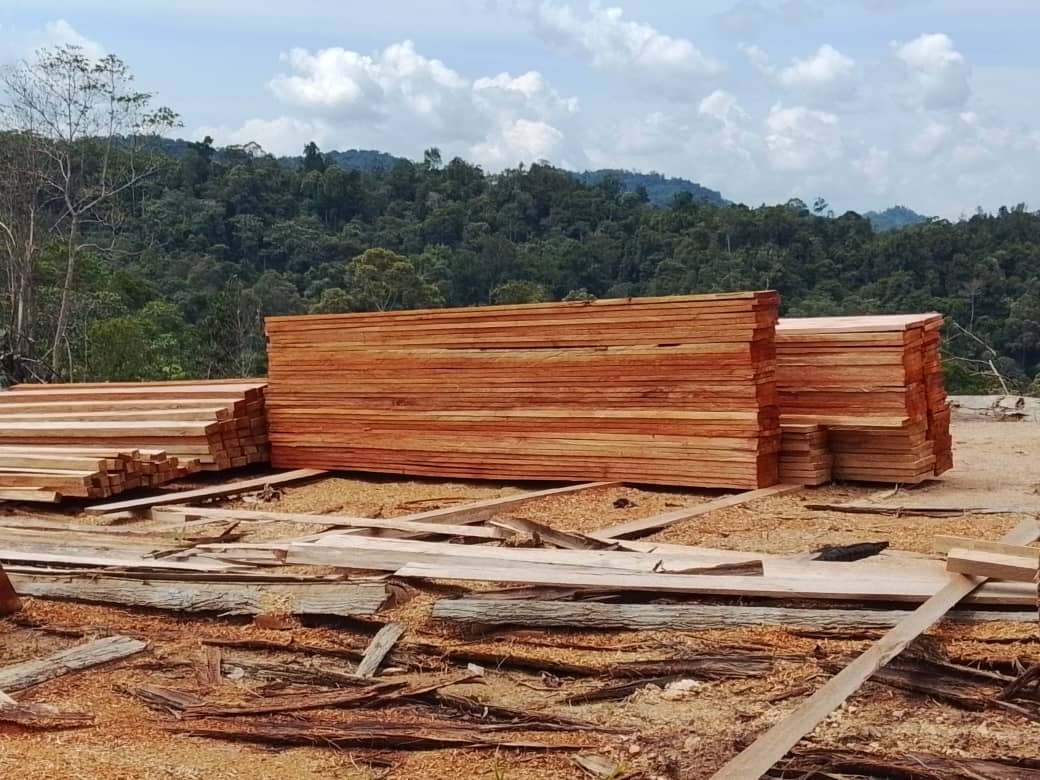
“We harvested timber for personal, non-commercial use to build our family house on our ancestral land”, says Mutang Tuo, resident of Penan settlement Ba Payau. The wood was confiscated by the Forest Department Sarawak and later removed without any explanation, consultation, or official communication with the residents who required the timber for housing purposes.
While families residing in the rainforest are penalized for using wood sustainably for the construction of their homes, large-scale logging operations continue to be approved unabated. Such actions question the priorities of the Forest Department Sarawak, which leaves the impression to serve rich timber tycoons instead of focusing on forest protection, sustainability, and the rights of Indigenous peoples.
“This raises a fundamental question of fairness and priorities,” said Balang Nalan, Penan from the Upper Baram. “In Sarawak, several giant logging companies have become rich exploiting our rainforest for decades. Yet local Indigenous Penan families are punished for harvesting wood to build their own home.”
The community of Ba Payau had also been holing a blockade near their settlement against the carbon trading encroachment by Shin Yang. Mutang Tuo explains: “How can it be, that big companies are given the permission to destroy our land and make profit from it while we are not even allowed to use our timber to build our house.”
“The issue is not just about wood,” added Balang Nalan. “It is about justice, dignity, and the right of Indigenous peoples to live on and care for their ancestral lands.”
Based on residents’ observations, the amount of timber seized is estimated to be several tons. However, the exact amount cannot be determined as no list of the seized items, inventory, or official documents was provided to the residents.
Community leaders and civil society organizations are seeking clarification on how forestry regulations are applied, particularly with regard to small-scale, subsistence use of timber by Indigenous peoples compared to commercial logging operations.